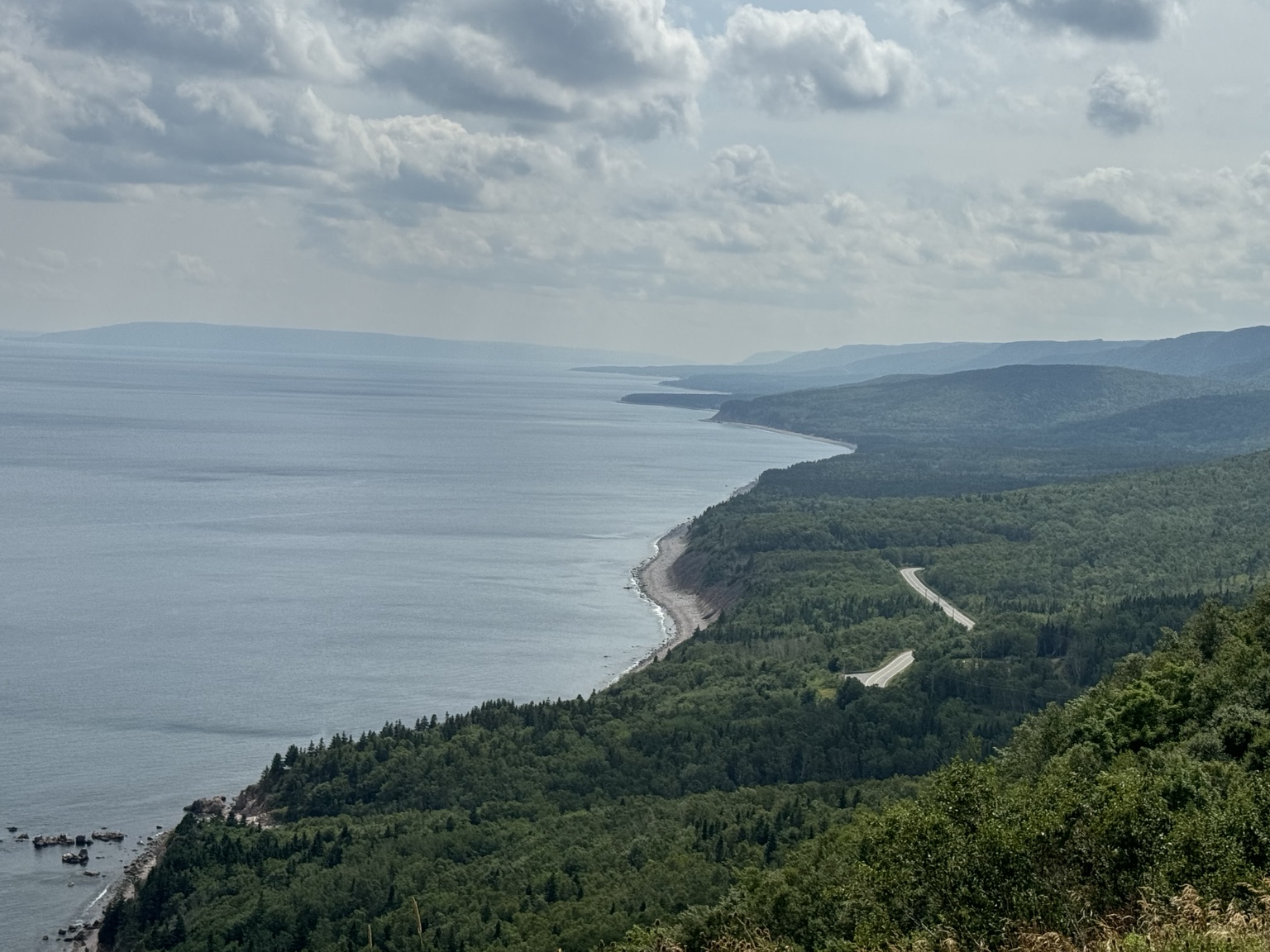
Nova Scotia
Coastal Roads & the Cabot Trail
In August 2024, we headed north from Massachusetts to explore Nova Scotia by motorcycle. We rode Cape Breton’s Cabot Trail, stopped at Glenora Distillery, and explored the Fortress of Louisbourg before continuing to Peggy’s Cove and Lunenburg.
Follow our journey through the routes we rode, the places we visited, and the photos we brought home.
From Massachusetts to Cape Breton
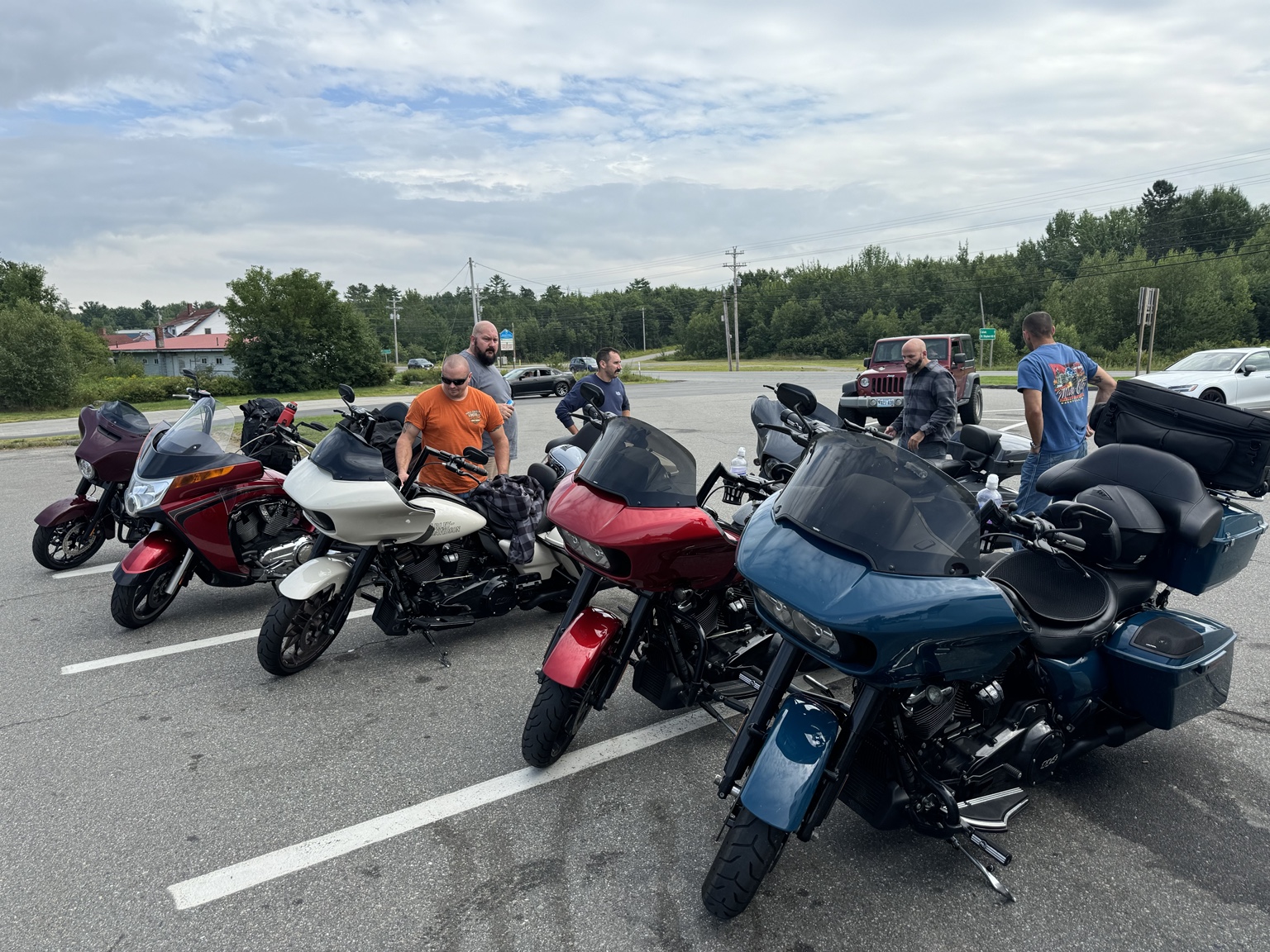
We set out from Massachusetts in August 2024 with the motorcycles packed for a trip to Nova Scotia. Our first day took us north through Maine and across the Canadian border into New Brunswick. Before we reached the coastal roads and scenery that had drawn us to the trip, we had a full day of riding to get there. We spent our first night in Moncton, breaking up the journey to Cape Breton.
That evening, we had dinner at the Pump House Brewpub. Its firefighter inspired atmosphere gave the place character, and the great late night eats menu suited our stop after a long day on the motorcycles. It became part of the trip’s story before we had even reached Nova Scotia, a reminder that the stops along the way can be just as memorable as the destination.
The following day, we continued into Nova Scotia and made our way to St. Peter’s on Cape Breton Island, our base for exploring the Cabot Trail and the Fortress of Louisbourg. That night, we grilled dinner and settled in after two days of traveling. All the liquor stores were closed, but we found a local bar that sold us beer to take back with us. With dinner on the grill and a few beers for the evening, we had a chance to relax together before the next day’s adventure.
Riding the Cabot Trail
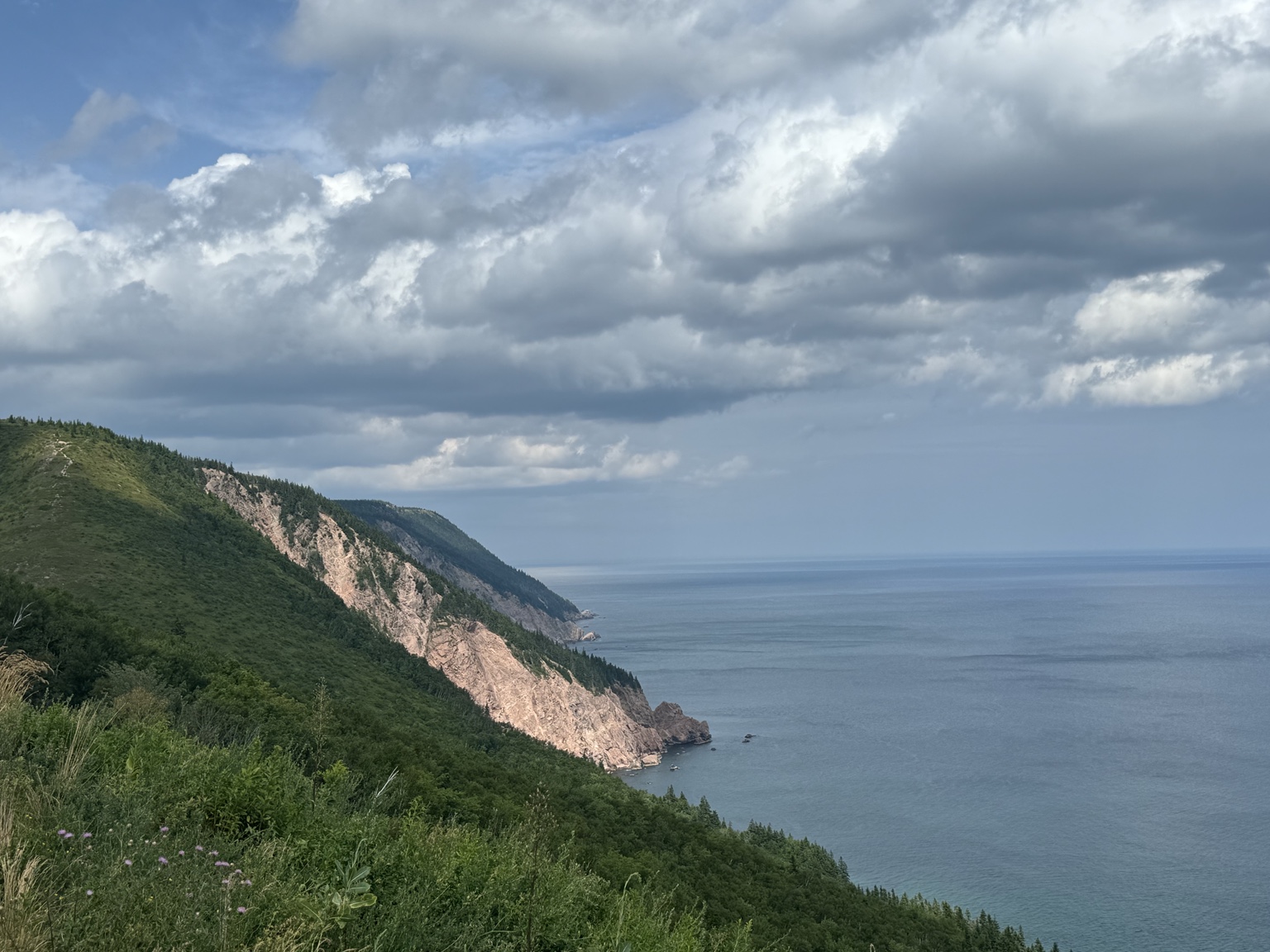
Our day on the Cabot Trail began with great weather and the coastal scenery we had traveled to Cape Breton to see. The road wound through forested hills and along the ocean, giving us plenty of reasons to pull over and take photos. From the overlooks, we could see the shoreline stretching into the distance and sections of roadway weaving through the landscape below. Those early stops gave us time to enjoy the views before continuing around the trail.
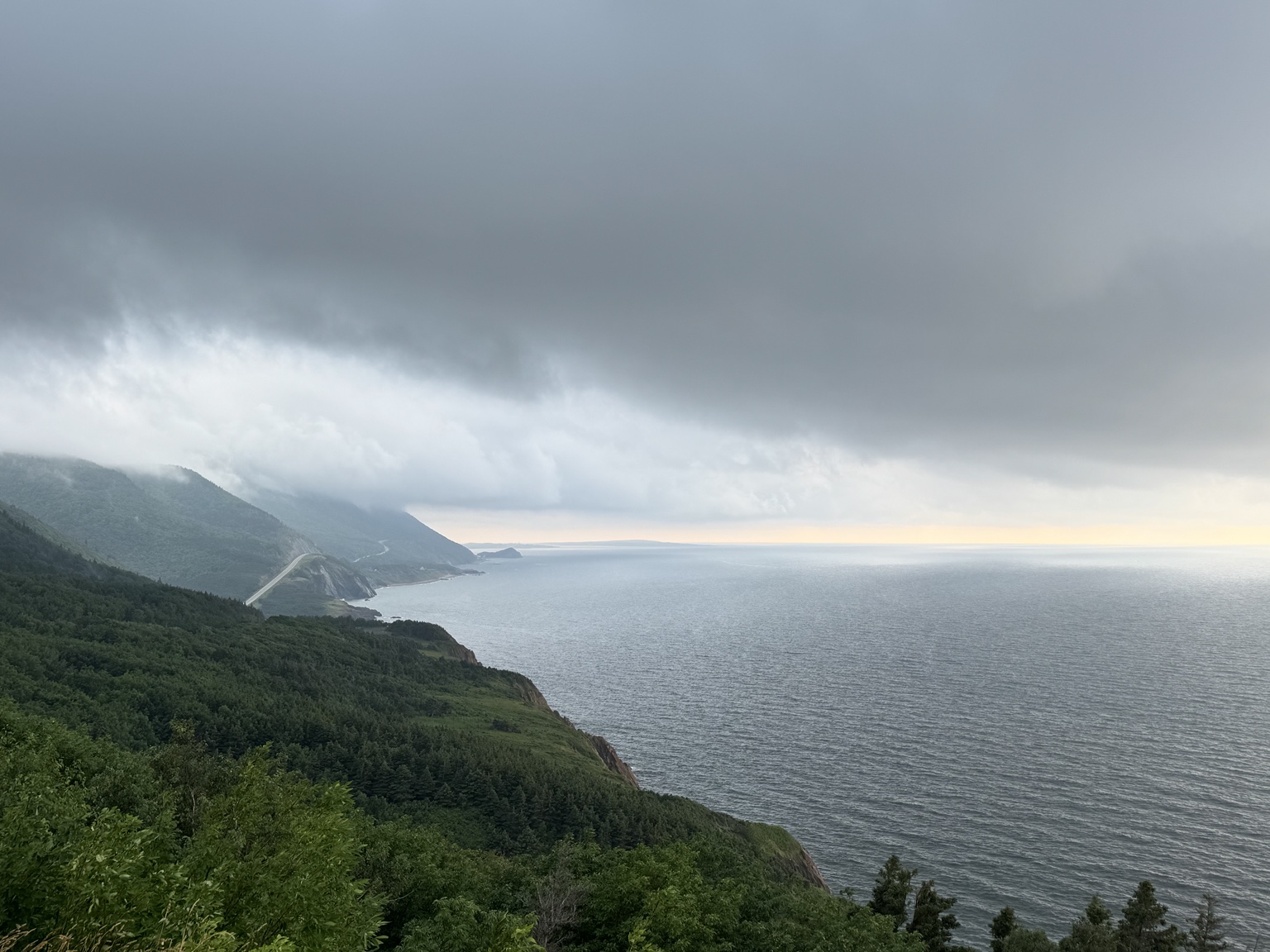
As we reached the higher elevations around the middle of the ride, conditions changed dramatically. Thick fog rolled in until we could barely see the roadway in front of us. The sweeping views disappeared, and our attention shifted to making out where the road went. A car ahead had its emergency flashers on, and we followed its lights to help us see our way through the fog.
That stretch became one of the most memorable parts of the trip. The day had started with clear views and good riding weather, yet we found ourselves working through conditions that made it difficult to see what was directly ahead. Our photos capture the scenery and the clouds moving over the coast, but the experience of riding through that fog is something we remember just as clearly.
Our ride also brought us to Glenora Distillery for dinner, giving us a chance to settle in after a day that had delivered both beautiful scenery and challenging riding.
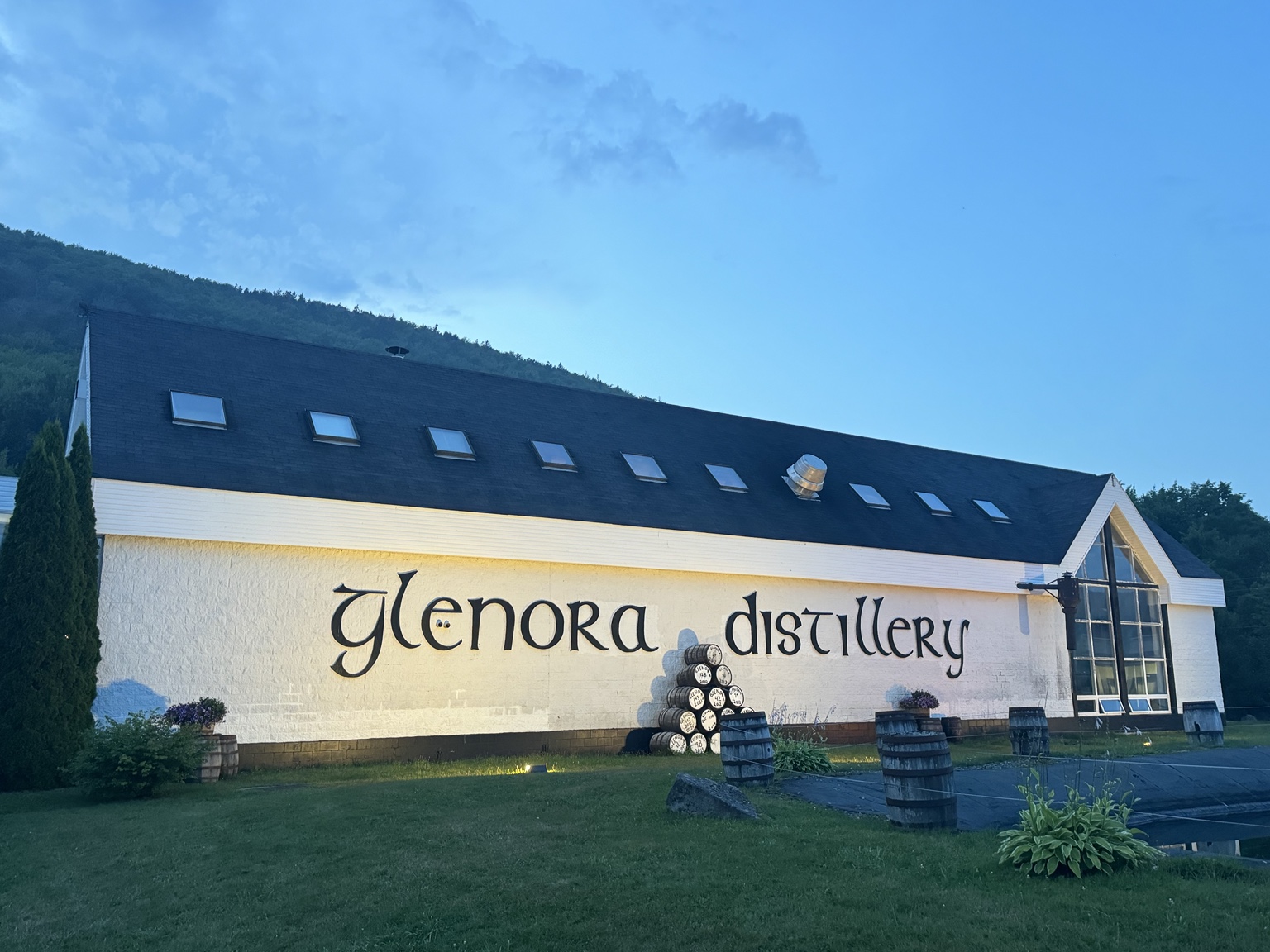
Dinner at Glenora Distillery
After a day of coastal roads and thick fog on the Cabot Trail, we stopped for dinner at Glenora Distillery in Glenville. Sitting down for a meal gave us a chance to relax together after the ride. The distillery added another dimension to our time on Cape Breton, connecting the island’s scenery with its Scottish heritage.
Built in 1990, Glenora is North America’s first single malt whisky distillery. Founder Bruce Jardine envisioned making a whisky that reflected Cape Breton’s Scottish roots, bringing equipment and expertise from Scotland to help turn that idea into reality. The distillery uses water from MacLellan’s Brook, which runs through the property, linking its whisky to the landscape around it.
The first production run filled just 20 barrels. A decade later, in 2000, Glenora released its first Glen Breton Rare whisky. That history made it an interesting place to stop, even with dinner as the reason for our visit. Our photo of the distillery captures another memorable destination from a day that had already given us plenty to talk about.
Exploring the Fortress of Louisbourg
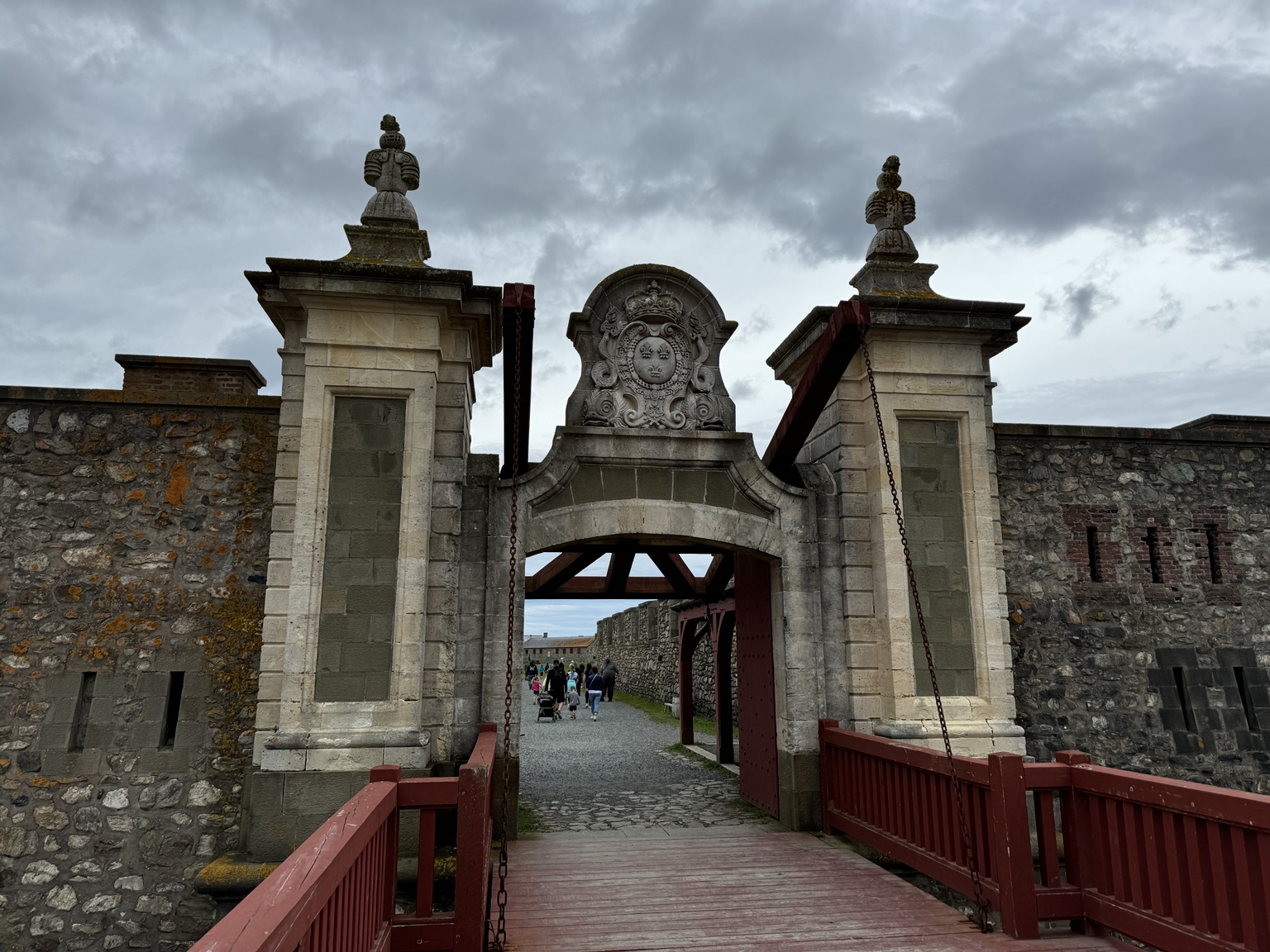
Our time on Cape Breton included a visit to the Fortress of Louisbourg, where we parked the motorcycles and spent time exploring on foot. Originally built by the French during the 1700s, Louisbourg was both a fortified town and an important Atlantic trading port. Its history reaches beyond the walls, connecting Cape Breton to the struggle between France and Britain for influence in North America.
What visitors see today is a carefully researched reconstruction of approximately one quarter of the original walled town. Buildings, streets, and defenses recreate Louisbourg as it appeared during the 1740s. Historical documents, maps, and archaeological research guided the work, making the site much more than a reproduction of a single fort. It gives visitors a sense of the community that lived and worked within its defenses.
For us, there was also a connection to Massachusetts, our home state. In 1745, Massachusetts Governor William Shirley helped organize an expedition against Louisbourg during King George’s War. New England troops under William Pepperrell, supported by British naval forces, captured the fortress. Walking through the reconstructed town brought us to a place where the history of our own region intersected with the island we had traveled so far to explore.
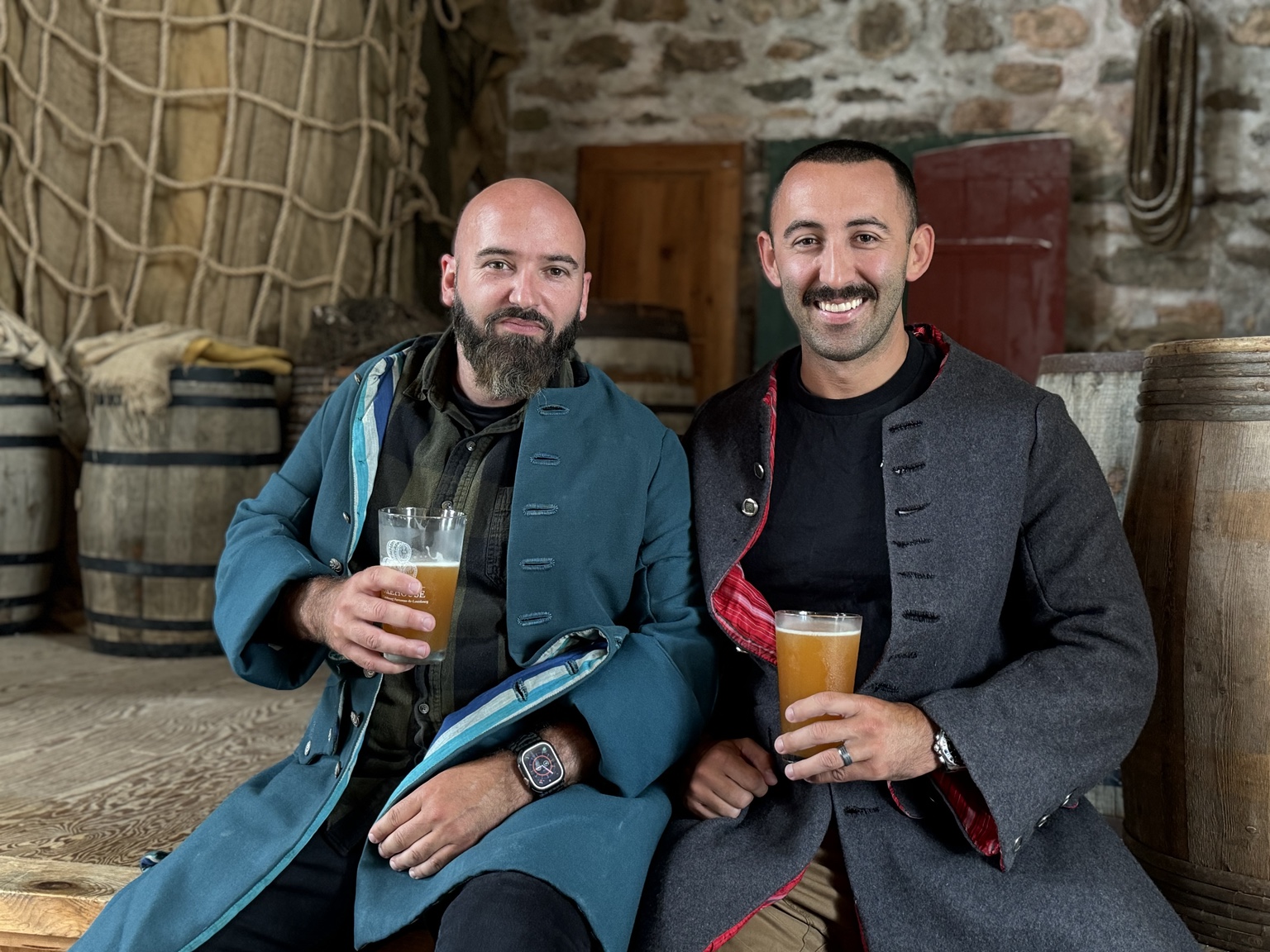
We also found the tavern inside the fortress and enjoyed a few beers inspired by the period. The photo of Jay and Justin wearing overcoats was taken there, adding a little eighteenth century style to the visit. The tavern gave us a chance to sit together over a beer before continuing our walk through the reconstructed town.
Peggy’s Cove
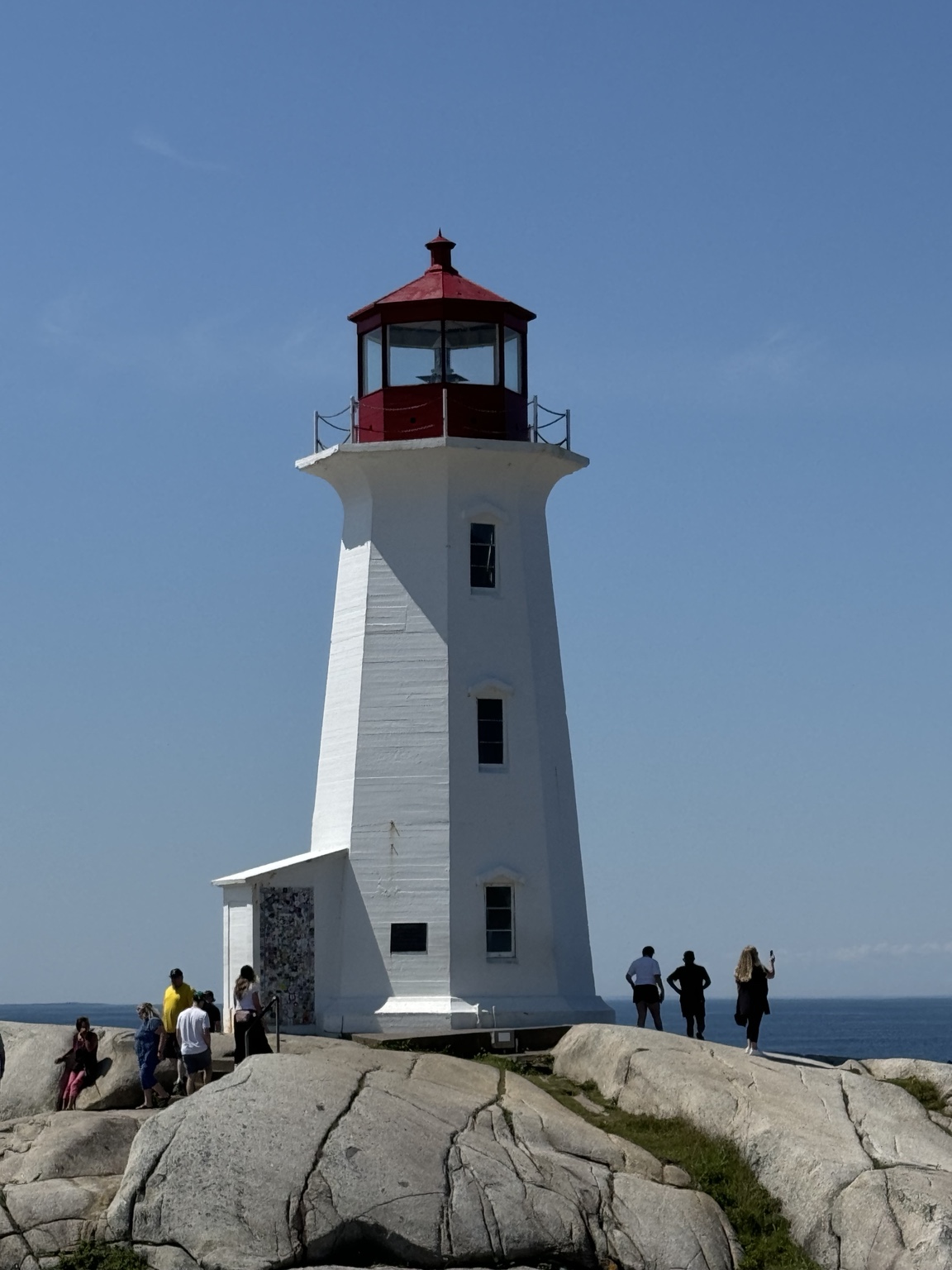
After our time on Cape Breton, we continued toward the Halifax area and explored Nova Scotia’s South Shore. One of our stops was Peggy’s Cove, where the lighthouse stood above the granite shoreline with the Atlantic stretching out behind it. We took time to look around and get photos, including the lighthouse shot featured here.
Peggy’s Cove was very crowded during our visit. People were gathered around the lighthouse and spread across the rocks, taking photographs and enjoying the view. After the open roads and coastal overlooks of Cape Breton, arriving somewhere this busy gave the day a different feel. Our photo captures both the lighthouse and the crowds around it.
The rocky shoreline offered a different perspective on the coast from the high elevations of the Cabot Trail. Here, we could take in the ocean from beside the lighthouse before getting back on the motorcycles. From Peggy’s Cove, our exploration of the South Shore continued to Lunenburg, where we spent time at the harbor and walked through town.
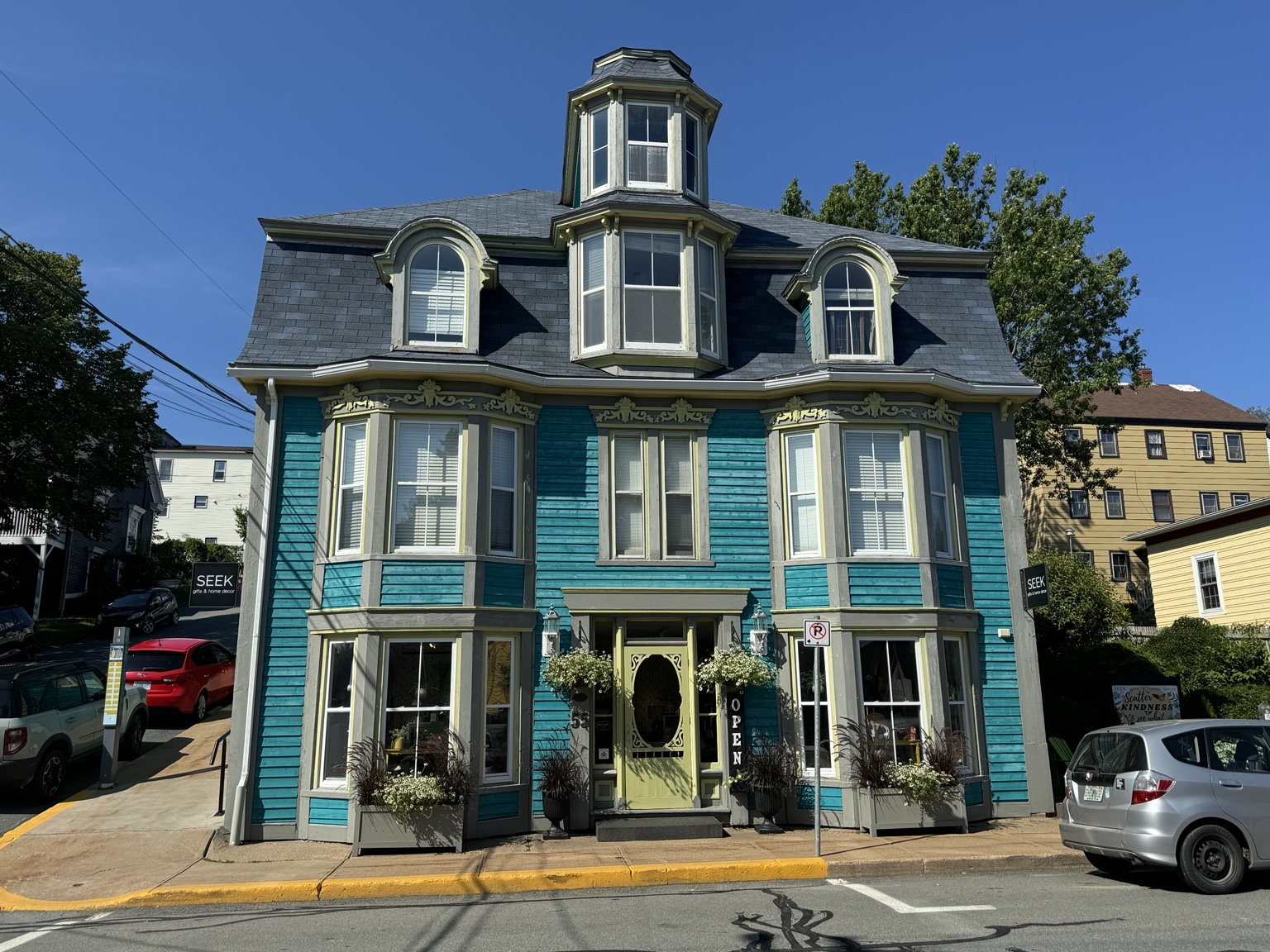
Exploring Lunenburg
Our ride along the South Shore brought us to Lunenburg, where we parked the motorcycles and spent time exploring on foot. We enjoyed the harbor and walked around town, taking in the waterfront and colorful buildings. After spending so much of the trip on the bikes, walking gave us time to notice the details along the streets, including the ornate trim and distinctive windows on the building in our photo.
Lunenburg also had an unexpected connection to Massachusetts, our home state. The town served as a filming location for Netflix’s Locke & Key, standing in for the fictional community of Matheson, Massachusetts. Its streets and waterfront helped create the show’s coastal setting, giving us another connection to home while we were exploring Nova Scotia.
While we were there, we received news that changed the final part of our trip. Our ferry from Yarmouth to Maine had been canceled because of a tropical storm. The crossing we had planned was no longer an option, and we had to work out our return by road. We would retrace our route through Nova Scotia and New Brunswick, spending our final night in Maine before continuing to Massachusetts.
A Change of Plans for the Ride Home
The canceled ferry meant returning overland through Nova Scotia and New Brunswick, retracing the route we had taken at the start of the trip. Instead of boarding in Yarmouth for the crossing to Maine, we had another long stretch of riding ahead of us. We adjusted our plans and began the journey back toward Massachusetts.
Along the way, we encountered torrential rainfall unlike anything we had ridden through before. Even our rain gear could not keep us dry. Gear we had brought to handle wet weather reached its limits, and we found ourselves soaked with miles still to cover. The return became one of the toughest parts of the trip.
We spent our final night in Maine before continuing home to Massachusetts. Looking back, the trip gave us much more than the coastal scenery we had set out to see. There were evenings together over dinner, history with connections to home, and time spent exploring places off the motorcycles. There was also thick fog on the Cabot Trail and a return ride that tested our rain gear like never before. Those experiences belong in the story just as much as the photographs of the views.
PLAN YOUR RIDE
Three Scenic Routes
Explore three scenic routes from our Nova Scotia adventure. Allow extra time for fuel, food, photos, sightseeing, and changing road conditions.
01 / RIDE
Cabot Trail loop with Glenora Distillery
A Cape Breton loop along the coastal roads, with Glenora Distillery toward the end of the ride.
02 / RIDE
St. Peter’s to the Fortress of Louisbourg
A scenic coastal ride from St. Peter’s to the Fortress of Louisbourg.
03 / RIDE
Peggy’s Cove and Lunenburg
From Timberlea to Peggy’s Cove lighthouse, then along the coastal roads to Lunenburg. The return ride is additional.